

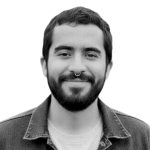
 Sebastián Moya Durán is a veterinarian from the University of Chile (2015), a Master in Psychosocial Research and Intervention (2016-2017) and a Postgraduate Diploma in Applied Social Research Techniques (2023-2025) from the Autonomous University of Barcelona, and a Doctor of Medicine and Animal Health from the same university (2021). His doctoral thesis explored the psychosocial factors that influence the implementation of biosecurity measures on dairy farms in Spain. He has developed his postdoctoral career in several international centers: at INRAE – École Nationale Vétérinaire de Toulouse (France), within the ROADMAP project; at the School of Veterinary Medicine and Science of the University of Nottingham (United Kingdom), linked to the BIOSECURE project; and at the Institute for Research in Hunting Resources (IREC) of the University of Castilla-La Mancha, within the framework of the EUPAHW project. He is editor of the journal Veterinary Record Open (British Veterinary Association). He is currently a postdoctoral researcher at IGOP, where he leads the BEST-F project, which is being developed between Spain and the United Kingdom, and participates in the project “Guardians of the high-Andean heritage: Memory, present and future of camelid livestock in Arica and Parinacota” in Chile. His research focuses on the analysis of psychosocial, communicative and organizational factors that affect practices related to preventive animal medicine and animal welfare in livestock production systems, combining interdisciplinary qualitative and participatory approaches with a One Health perspective.
CONTACT
Email: sebastian.moya@uab.cat
Web: https://www.webofscience.com/wos/author/record/IWE-4038-2023
UAB Research Portal: https://portalrecerca.uab.cat/ca/persons/sebastian-jesus-moya-duran-3/
ORCID: https://orcid.org/0000-0001-8751-6533
ResearchGate Citations: https://www.researchgate.net/profile/Sebastian-Moya-Duran
AREAS OF INTEREST
Biosecurity, use of antimicrobials, animal preventive medicine, animal welfare, mixed methods, psychosocial factors, One Health.